
Making Math Memorable: The Power of EOY Themed Math Days
- Kristy Johnson

- Mar 4
- 3 min read

By the time spring and end of year testing rolls around, upper elementary students (and teachers) can feel the pull of summer. Attention spans start to shrink, routines get wiggly, testing interferes with schedules, and motivation starts to dip. How about instead of fighting that energy, you channel it?

End of Year themed math days are a powerful way to keep school days meaningful, while celebrating how far students have come and how close they are to the next grade level. When we strategically design these theme days, they aren't just filler or fluff, but meaningful reinforcement of key standards, promoting collaboration, and giving students a joyful way to apply real-world math skills.
Keep reading to see my top 3 reasons theme days work, tips for making them successful, and the impact beyond the classroom!
Why Theme Days Work
Authentic Application
Upper elementary students have worked through computation and word problems all year long. They have been applying their math knowledge in a variety of ways and now they are able to take those concepts and apply them to real world problem solving, all while having a fun experience. Themed days allow you to embed various key skills into your review - Multi-Step Word Problems, The Four Operations, Fractions, Decimals, Data Analysis, Measurement Conversions, Budgeting, and Financial Literacy.
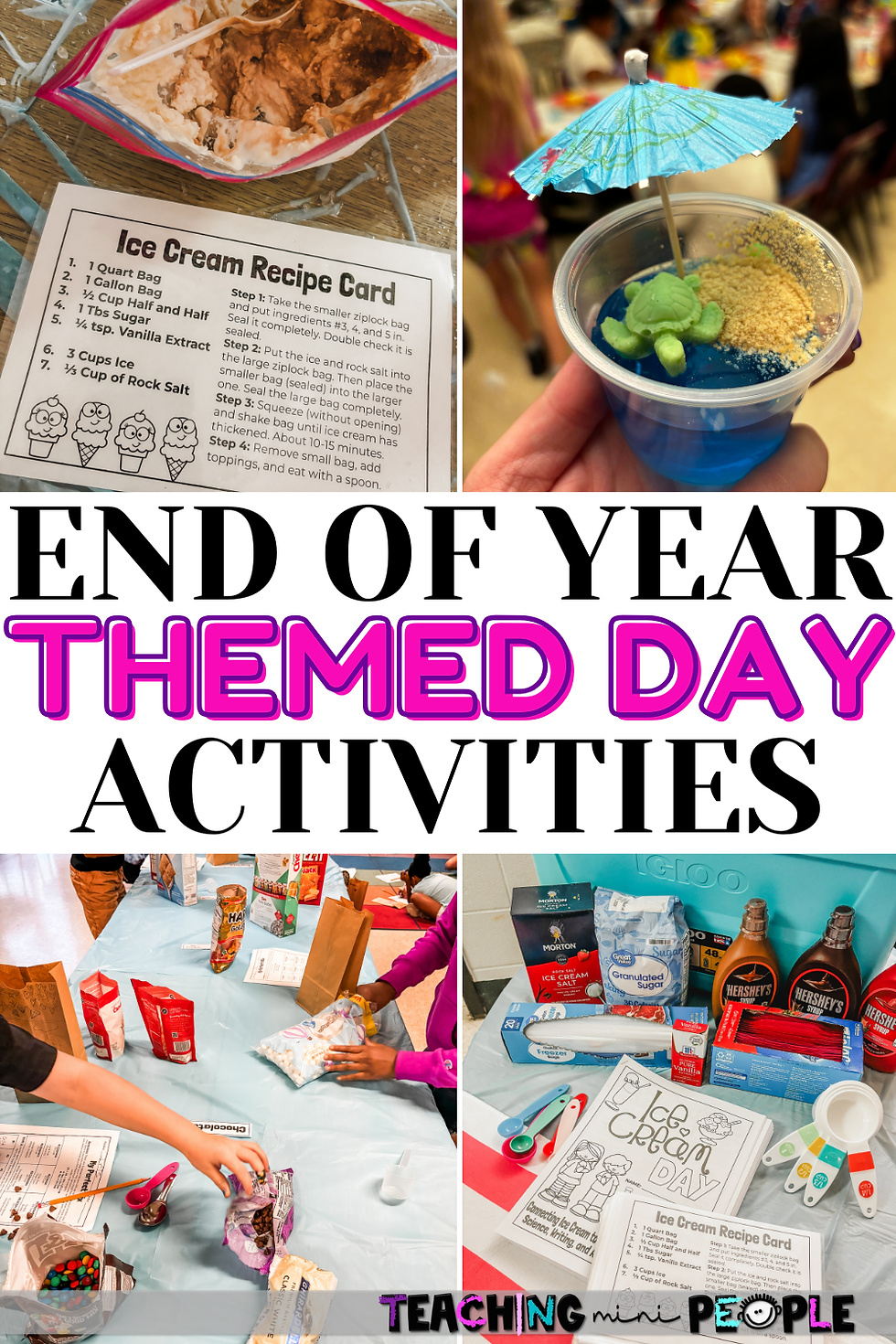
When students see math connected to everyday experiences, like recipes or planning trips, it feels purposeful rather than just another math assignment. In my ice cream theme day packet, your students make homemade ice cream and then work in groups through an ice cream themed packet reviewing math skills!

Increase Engagement without Lowering Rigor
Just because we tie in fun, it does not mean the process of adding math becomes less challenging. With themed tasks, we can require deeper thinking, encourage strategy comparisons, promote math conversations with a real world connection, and build perseverance.
Due to being wrapped up in the exciting theme of the day, students are often more willing to tackle complex problems that they typically would not be interested in when faced with a worksheet or an assessment.
With my beach day theme packet, students make a simple jello snack and get to review measurement and fractional line plots with a fun beach theme- all standards based but engaging!
Build Community
You have worked all year to build a class community - students who can work together to support and motivate one another. Now, it’s time to move on in different ways - a new grade level, with new teachers, and even a new school for some students next year. These theme days allow you to build community one more time among the students to strengthen their friendships for after they leave your classroom. End of year theme days are flexible and are perfect for partner work, small group collaboration, hands-on stations, and shared experience conversations.
Ending the school year with positive math memories creates fun shared moments amongst the students and ties to deeper understanding of the concepts. The trail mix theme packet is a great team building review of measurement, symmetry and patterns using an every day favorite snack!
Tips for a Successful Theme Day
Here are a few tips I always try to stick to when planning my theme days. These tips help me start out and finish strong, while making sure math concepts stay at the center of the day.
Pick themes your students will enjoy and are interested in
Keep learning targets visible
Use stations or a work packet to maintain focus
Build in reflection time
Include both collaborative and independent components
End with a celebration (such as a themed snack or certificate)
The Bigger Impact
Theme days do more than review skills and fill time. They reinforce that math is all around us, show students they are capable of problem solving, and they help students end the year with confidence and fun. We want students to enjoy math, we want them to walk away thinking, "Math was fun today!" or "I understand why we need to know fractions!” These are thoughts that will stick for students as math becomes more challenging. Even more powerful than these statements is when they realize they completed math procedures they thought they couldn't do all year, just because it was presented in a fun way.




rr88 link mình mới thấy bạn bè nhắc nên bấm thử cho biết, kiểu tò mò xem trang chủ trông ra sao thôi. Mình không có ngồi đọc kỹ từng mục, chỉ lướt qua xem bố cục có dễ chịu không. Cảm giác đầu tiên là trang nhìn khá thoáng, các phần chia khối rõ ràng nên kéo xuống không bị rối mắt, nhất là đoạn giới thiệu với phần khuyến mãi tách riêng nên dễ nhận ra. Có chỗ họ ghi RR88 tham gia thị trường từ 2018 và đặt trụ sở ở Philippines, thấy để thông tin vậy cũng đỡ mơ hồ. Thanh menu đặt ngay chỗ dễ thấy, bấm qua lại cũng mượt, và mấy tiêu đề…
tải sunwin bữa trước mình cũng tò mò ghé vào xem thử vì thấy mọi người nhắc hoài, chủ yếu là lướt giao diện chứ không có chơi gì sâu. Trang nhìn khá dễ chịu, kiểu chia nội dung theo từng khối nên đọc nhanh không bị rối mắt. Mình có dừng lại ở phần giải đáp thắc mắc, thấy họ ghi rõ luôn chuyện một số nước bị hạn chế truy cập và nhắc điều kiện phải đủ 18+ mới đăng ký được, đọc cái hiểu liền. Nói chung mình thích kiểu trình bày thẳng thắn vậy, khỏi phải đoán. Kéo xuống dưới vẫn giữ bố cục gọn gàng, tiêu đề “Giải Đáp Thắc Mắc” nổi bật và tách…
https://789clubvn.work/ mình ghé thử vì thấy mấy người trong nhóm chat nhắc, kiểu vào xem cho biết thôi. Vừa mở ra thấy giao diện khá gọn, nhìn phát là biết chỗ nào là phần giới thiệu, chỗ nào là nội dung chính, không bị rối mắt. Mình dùng điện thoại lướt một vòng cũng ổn, thao tác mượt, chữ dễ đọc nên không phải phóng to thu nhỏ liên tục. Có cái mình để ý là họ chia thông tin thành từng khối rõ ràng, tiêu đề đặt nổi nên kéo xuống vẫn nắm được đang đọc phần nào. Nói chung cảm giác thiết kế hướng tới người mới, vào xem nhanh cũng không mất công tìm. Mình thích nhất…
hit club mình mới ghé thử vì thấy bạn bè nhắc hoài, kiểu vào xem cho biết thôi chứ chưa chơi gì. Cảm giác đầu tiên là trang nhìn khá “gọn mắt”, các phần nội dung chia thành từng khối rõ ràng nên kéo xuống không bị rối. Mình có đọc lướt đoạn giới thiệu, thấy họ ghi nền tảng ra mắt từ 2015 nên cũng hiểu sơ sơ lịch sử hình thành, không phải kiểu trang mới dựng vội. Với lại có một ô nói về bảo mật nhiều lớp đặt riêng, nhìn phát là thấy họ cố làm cho người dùng yên tâm hơn. Nói chung mình thích kiểu trình bày này vì không cần mò nhiều vẫn…